
Thursday, April 13, 2017
Ode to a Bad Example, in translation at Academia Posmodern de Letras
Friday, February 24, 2017
Welcome
Thanks for visiting my web page. Here you'll find links to the places that have my work. I will also share the work of others when I find myself being pulled into it, and providing I can get permission.
Hopefully this can also become a place to share ideas about writing, particularly poetry, although, almost anything could be interpreted as poetry.
I am available to read my work and discuss poetry with students or anyone else interested, as individuals or groups, and I'm able to travel a reasonable distance to do so.
I live in Michigan, about one hundred miles north of Detroit. I always appreciate hearing from someone who has taken the time to read my work. An E-Mail can be sent by following the link on the right to my full profile.
Hopefully this can also become a place to share ideas about writing, particularly poetry, although, almost anything could be interpreted as poetry.
I am available to read my work and discuss poetry with students or anyone else interested, as individuals or groups, and I'm able to travel a reasonable distance to do so.
I live in Michigan, about one hundred miles north of Detroit. I always appreciate hearing from someone who has taken the time to read my work. An E-Mail can be sent by following the link on the right to my full profile.
Saturday, November 02, 2013
Twelve Ideas to Eat Better for Less
Here are some ways to get better meals for less money. It takes effort but your family will love
the results.
- Learn to cook from scratch. The cost of processing foods into ready-to-eat is expensive and the ingredients are not always wholesome. If you don’t know how to prepare whole foods, such as rice, potatoes, noodles, dried beans, etc, then learn. You're on the internet, right?
- Learn how to best prepare the less expensive cuts of meat and poultry. Cuts like round roast can be prepared using moist heat (pot roasts, stews) and will be as tender as more expensive cuts when cooked that way. Larger chickens can best be prepared as chicken and dumplings or chicken noodle soup for the same reason.
- Look for discounts on expired food. The dates are not dates the food spoils on, they are dates the food should be sold by. If you use them soon there is nothing wrong with them. Obviously this doesn’t apply to dairy or similar fresh foods which might spoil. But things like breakfast cereals are certainly good past their “sell by” date. If you see meat, fish or poultry in the case on or past the sell by date, and it still looks fresh, ask the butcher for a discount. Freeze what you won’t eat right away.
- Buy in bulk. You’re going to use it all, eventually. Why buy small shakers of something like garlic powder when you can buy a huge one for just a little more than the small shakers? Can’t find them in the grocery? Look for retail outlets of the food service suppliers. In Michigan that’s Aldi, Sysco or Gordons. You can also try Sams Club or Cosco but will need to buy a membership for those two. You can actually buy a gallon of mustard for just a couple of dollars. Which leads us to…
- Share or buy co-operatively. If you can organize a group of neighbors to buy together, you can really save a lot. Imagine splitting that gallon of mustard 4 to six ways. You’d each be able to fill three or four empty mustard bottles for about fifty cents. You can also do that with large bags of noodles, flour, sugar, rice, salad dressings, bar-b-que sauce, pancake syrup, and many, many more items. Again, look into the commercial food services that have retail stores near you.
- Learn the secret of top chefs. Chefs don’t pick a recipe and then go out to buy what they need, they look at what’s in season, or what’s on sale, and then they choose the recipes that use those ingredients. So if chicken thighs are on sale this week, make chicken and dumplings, chicken soup, b-b-q chicken, but not pot roast. An example of this would be buying a turkey when they are on sale, just before Thanksgiving.
- Learn to use the services in a grocery. Remember that sale on turkeys? If you buy a larger turkey the butcher can saw it in half, right down the center, and re-wrap it for you. Freeze one half. You might ask for this same service in produce. Are you shopping for a group? Ask for that watermelon to be split and wrapped as two or more pieces.
- Find a day old bread store. The bread isn’t really stale. Even if it is, it still makes great toast, French Toast, stuffing and croutons. You didn’t know you could make croutons? Bought more than you can use? Bread will freeze just fine.
- Learn to can or freeze. Then you can buy a whole bushel of tomatoes for a few dollars and have canned tomatoes all winter for pennies a jar. You can watch videos or read about canning on the internet, but if you know someone who cans, ask if you can help them for a couple of hours. You’ll learn all the tricks and short cuts that way! Jars can be expensive, so keep an eye out for canning jars at yard sales and re-sale shops.
- If you’re going to learn to can, and you have space to grow a small garden, these two things go hand in hand. Grow foods you like to eat. Tomatoes, green beans, corn, carrots, and green peppers can all be either canned or frozen for use in cooking later. You can also keep potatoes or onions for several months after harvest. Just store them in a cool, dry place. Again, a good way to learn to garden is to ask a neighbor, friend or relative if you can help them with their garden. Keep an eye out at yard sales and re-sale shops for garden tools like rakes and hoes.
- Check for coupons, but, remember that the store brand may be cheaper, even with the coupon savings on the national brand. You’ve got to do your homework and detective work to get the best buy.
- Think about left-overs when planning meals. Some recipes create tomorrow’s lunch at the same time. You can make chicken and dumplings and keep half the chicken for sandwiches the next day. Just make extra dumplings to make the first meal more filling.
Sunday, September 22, 2013
How My Man Came to Leave

Yesterday the Sanilac County Historical Society conducted an event called "House in Mourning" at their museum. It included a cemetery walk where I served as a volunteer. I read the following poem at the grave of three sailors who drowned in a storm on Lake Huron. This year is the 100th anniversary of The Storm of 1913. In one week in November eight ships and over 200 sailors were lost on Lake Huron alone.
How My Man Came to Leave
Some men work
the factory floor;
some men work
some men work
at a trade.
But here men go down
to the sea in ships,
our husbands, brothers,
our husbands, brothers,
and sons.
They tell you
They tell you
it’s to put food on the table,
they tell themselves
they tell themselves
that too.
But there is a pull
But there is a pull
beyond earning a living.
The lake is a temptress,
smiling,
The lake is a temptress,
smiling,
beguiling. In summer
she’s a siren
in shimmering sapphires.
A sailor’s seduction ensues.
Through the Summer a sailor's
enthralled with this mistress.
His home and his family
enthralled with this mistress.
His home and his family
in memory dim.
But Autumn brings
But Autumn brings
a new look to the lake.
Still attractive, dignified,
but portending a change,
foretelling a graceless aging
Still attractive, dignified,
but portending a change,
foretelling a graceless aging
too soon coming.
By November the lake has become
a bitter old wench, angry,
By November the lake has become
a bitter old wench, angry,
short tempered.
She senses her suitors
She senses her suitors
are longing to leave her,
to abandon her
beneath the coming ice.
But unwilling to die
But unwilling to die
old and lonely,
one week
one week
in November
during the season of ’13,
Old Dame Huron
during the season of ’13,
Old Dame Huron
reached up her icy arms,
heaved her mighty breath,
heaved her mighty breath,
and snapped eight ships.
More than two-hundred lovers
More than two-hundred lovers
she took to bed,
never to wake.
never to wake.
Few were left
to tell the fate
of their ship
of their ship
and of their brothers.
On shore,
I soon learn the news
I do not wish to hear.
On shore,
I soon learn the news
I do not wish to hear.
My sailor has abandoned me
to lie forever by the side
of that Jezebel,
Huron.
to lie forever by the side
of that Jezebel,
Huron.
Monday, March 18, 2013
Dear Paul
Today I received an e-mail from someone asking where he could get his poems published. This is a pretty common question when poets are just starting out, so I took the time to reply, and decided to share it with everyone as an open letter.
My ideas aren't necessarily the best, or complete, so please feel to add your own suggestions to Paul in the comments afterwards. Thanks.
---------------------------------------------------------------------------
Hello Paul,
I'm not certain where you came by my e-mail address, but I would be glad to suggest some ways to get your poetry published.
First, find markets that are actually looking for poetry submissions. The easiest way is to Google "calls for poetry submissions" or "calls for poetry manuscripts." This will bring up the names of many 'markets,' which could be either print or online publications seeking poems.
Another way to find markets is to search 'Dutrope Digest'. Google that name; it's an online directory of publishers looking for many types of submissions. Duotrope used to be free, but now they have a subscription fee. They do offer a free trial period though.
Another really good way to find publications for your submissions is to buy or borrow a copy of 'Poet's Market', an annual book that lists everyplace known to accept poetry. The reason this is such a good resource is that they not only tell you the publications, they tell you how to contact them, who the editor is, how many poems they receive each year, how many they actually accept, if they pay or not, and much, much more. For example, they might tell you that 'Ahab's Whale' accepts nautical themed poems only, by e mail only. They might want an attachment in ten point Times New Roman font, or they may want the work in 8 point Arial Font, pasted into the body of the email. They may only accept poems from June to September, or they may take them year round. All that type of info is provided in 'Poet's Market', and it is critical, because many times if you don't follow their guidelines exactly, editors just delete your submission, or throw it in the trash if it's snail mailed in.
There are a few things that are critical if you're going to submit for publication. First, read the publication you are submitting to. If it's online that shouldn't be too hard. If it's in print, check the bookstore shelves or go to the library. It's important you know what kind of work the magazine uses, and that your submissions will fit in. No sense sending that avant-garde poem about domestic violence to Ahab's Whale if they only print nautical work, right? My first submission was to 'Poetry Midwest' and the rejection note came back simply, "We don't publish religious poetry." I didn't think my work was religious, but I got the point, I hadn't read the magazine. I only sent to them because I was from the Midwest. Another critical thing is, don't submit if you're not ready to receive brutal rejection. A friend, who is a very accomplished poet, with many, many publication credits, recently got a note that said, "Fuck this submission." While most editors are kinder, any rejection stings.
When you are first starting out I'd suggest you avoid contests. Especially avoid contests that require a fee. The chances of winning a contest are slim, and it should be obvious that the prizes are paid for by the people who enter and don't win.
I wish you luck and encourage you to jump in, and stick with it. I still remember my first acceptance, and the modest check that came with it! Cheers.
My ideas aren't necessarily the best, or complete, so please feel to add your own suggestions to Paul in the comments afterwards. Thanks.
---------------------------------------------------------------------------
Hello Paul,
I'm not certain where you came by my e-mail address, but I would be glad to suggest some ways to get your poetry published.
First, find markets that are actually looking for poetry submissions. The easiest way is to Google "calls for poetry submissions" or "calls for poetry manuscripts." This will bring up the names of many 'markets,' which could be either print or online publications seeking poems.
Another way to find markets is to search 'Dutrope Digest'. Google that name; it's an online directory of publishers looking for many types of submissions. Duotrope used to be free, but now they have a subscription fee. They do offer a free trial period though.
Another really good way to find publications for your submissions is to buy or borrow a copy of 'Poet's Market', an annual book that lists everyplace known to accept poetry. The reason this is such a good resource is that they not only tell you the publications, they tell you how to contact them, who the editor is, how many poems they receive each year, how many they actually accept, if they pay or not, and much, much more. For example, they might tell you that 'Ahab's Whale' accepts nautical themed poems only, by e mail only. They might want an attachment in ten point Times New Roman font, or they may want the work in 8 point Arial Font, pasted into the body of the email. They may only accept poems from June to September, or they may take them year round. All that type of info is provided in 'Poet's Market', and it is critical, because many times if you don't follow their guidelines exactly, editors just delete your submission, or throw it in the trash if it's snail mailed in.
There are a few things that are critical if you're going to submit for publication. First, read the publication you are submitting to. If it's online that shouldn't be too hard. If it's in print, check the bookstore shelves or go to the library. It's important you know what kind of work the magazine uses, and that your submissions will fit in. No sense sending that avant-garde poem about domestic violence to Ahab's Whale if they only print nautical work, right? My first submission was to 'Poetry Midwest' and the rejection note came back simply, "We don't publish religious poetry." I didn't think my work was religious, but I got the point, I hadn't read the magazine. I only sent to them because I was from the Midwest. Another critical thing is, don't submit if you're not ready to receive brutal rejection. A friend, who is a very accomplished poet, with many, many publication credits, recently got a note that said, "Fuck this submission." While most editors are kinder, any rejection stings.
When you are first starting out I'd suggest you avoid contests. Especially avoid contests that require a fee. The chances of winning a contest are slim, and it should be obvious that the prizes are paid for by the people who enter and don't win.
I wish you luck and encourage you to jump in, and stick with it. I still remember my first acceptance, and the modest check that came with it! Cheers.
Saturday, March 02, 2013

(Or, how’s it look from there, with your head up your
keester?)
As most of you have heard by now, the sky is falling. Again. Yup, the old fiscal cliff routine is being rehashed as the Budget Sequester.
It’s awful, just ask any politician. If you ask the Democrats they’ll tell you the Republicans are killing this country, and if you ask the Republicans,
well you know the drill.
I just figure we are all adults, at least those of us who
vote,
and we should perhaps take a look ourselves.
The sequester, which is supposed to be the nuclear option
to balance our budget, is going to trim spending over the
next
nine years. The
amount we’ll see cut this year is about eighty
five billion dollars, half from defense and half from
non-defense
spending. That
reduces the budget for defense by about eight percent
and the non-defense spending gets cut five or six percent.
Wow. Read that
again. Eight percent and six
percent. I know a lot
of people who have seen their incomes reduced by more than
eight
percent since the big crash in 2008. A lot of Americans are working
less hours, and/or at jobs with lower pay. Some haven’t found work
yet. I wonder how
come they haven’t just curled up and died, you know,
the way the politicians say that our country will, if we
have to have these
horrible budget cuts.
If my budget were cut by eight percent, I’d have to go
without popcorn
when I took my wife to the movies. You know, that doesn’t sound like
Armageddon to me, how about you?
There are a lot of things Americans would like their
representatives to cut.
Whenever you write to your rep asking for something like
this, you usually
get a reply that runs along the lines of, “Dear John,
Foreign Aid is actually
less than one percent of the federal budget, so even though no one likes
foreign aid, cutting it won’t help anything.” OK, raise your hand if you’ve
heard that before.
Uh huh, thought so.
Well, eight percent minus one percent is seven percent, and
if we could find
half a dozen more of those unimportant things that won’t
make any difference,
because they’re less than one percent, well, you do the
math. I know, this is one
of those times when “you do the math” actually involves
math.
But you should be OK with that, because remember, you are an
adult. You vote.
Right? I don’t know
how you vote, but I’ll tell you, one really smart cat once said
“Never re-elect anyone.”
I don’t know his name, but I think I’m going to listen
to him at the next election.
Sunday, November 25, 2012
Wednesday, November 21, 2012
What is ModPo?
Well, my writing is starting to stall out, get stale. I turn on my computer and read an article
about Coursera. I surf over and peruse
the offerings. There are dozens of
schools with hundreds of courses, even humanities. Then, there it is, as obvious as a dozen shirtless construction
workers on lunch break, resplendent in their yellow hard hats-Modern and
Contemporary Poetry. I leave, I come
back,
I enroll and then I wait.
The class has no professor, it is led by Al Filreis, an apostle channeling the gods
of modern poetry. He speaks Emily, he
speaks Walt, he speaks Stein, and some of us even understand his Stein.
Questions are asked.
I learn where to find the answers to the questions. I leave, I come back. I learn where to find the questions. Thirty odd thousand students all over the
world learn where to find the questions.
I drink a couple of beers, I get excited. We come to the poets I grew up with but we
don’t stop. We come to the poets who
are writing now, but we don’t stop. We
come to the point where my experience ends,
But we keep going.
The apostle is talking about non-authorship, about random operations and
chance and I’m thinking we must be in a casino. But we’re not in a casino, we are each in our own homes, in front
of our own computers. We meet in real
time on line, in message forums, in Google hangouts. Some of us meet face to face in Meet Ups. And then
It’s over. The
notification e-mails slow to a trickle.
The Facebook group starts to slack off.
Students go into withdrawal. The
Apostle goes home for Thanksgiving. I
am also thankful. My writing is no
longer stalled, no longer stale. I have
new friends from around the globe.
And thirty odd thousand people are now reading poetry with
new vision, in only ten weeks.
If it’s sounds too good to be true, well, sometimes it
really is that good.
Saturday, November 10, 2012
I've recently had the privilege of publication in Durable Goods, a strange print edition that gets sent to your actual mailbox. Yup, paper. Damn! OK, you should visit the site, subscribe, and then, go stand by your mailbox and wait. You'll get a new, pocket sized issue every two weeks. The cost of subscription is just the postage.

http://durablegoodsmicrozine.blogspot.com/
http://durablegoodsmicrozine.blogspot.com/
Sunday, November 04, 2012
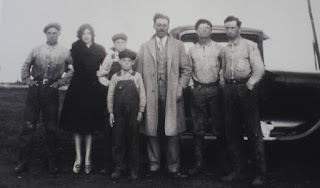


Studio 1219 poets
From l to r
Alinda Wasner, Lesley Lambright, David Blaine. Leanne McGinnis, Ben Bartman , Kerry Cox — with Ben Bartman and 3 others at An Evening of Poetry and Power.
Sunday, January 01, 2012
When a Rose Is Not a Rose
Figurative language, simile or metaphor for instance, often becomes a beginner’s roadblock to enjoying poetry. Perhaps you understand the concept of a simile, saying one thing is like something else, such as, “My love is like a red, red rose.” But maybe you aren’t quite sure how love, an abstract concept most easily viewed through the actions people take, can be like a physical object, the rose.
It seems that figurative language is often used to compare two disparate things. What you need is a bit of the mathematician’s logic here, a way to find a common denominator. We know that love isn’t red, that it isn’t physical and so it can’t share any of the rose’s physical attributes. Or can it? What is there about the rose that differentiates it from other flowers? Why didn’t Burns write about carnations? Might it be the rose’s thorns? Could love have virtual thorns, something that hurts us in spite of its beauty?
There may be many other explanations, but coming up with a theory and showing the logic for your conclusion is always going to lend weight to your hypothesis.
What about another device of figurative language, the symbol. Art has always been laden with symbols. Some are well known. Ravens are thought to be omens of death. Dogs are considered to indicate fidelity or loyalty. Although there are often clues, it is sometimes up to the reader to decide what things stand for. The important starting point is to realize that you can’t take everything within a poem at its face value; you have to search out what might be symbolic objects.
Poetry is one aspect of creative writing, and it has been said that creative writing requires creative reading. To appreciate poetry, you can’t be a mere spectator, you must wade in up to your knees, accept the passed baton, and then my friend...run with it.
Friday, December 16, 2011
Still Enjoying Poetry
OK, so you decided to plunge in and read some poems. What should you be looking for? Well, chill. I'm going to assume that if you're coming here to read this, you aren't writing professional criticism for a living. You don't need to know a metaphor from a simile, you just need to notice what's going on in the poem.
Let me tell you about a very interesting museum my wife and I visited last spring. It was the National Civil Rights Museum in Memphis, TN. When we went in the ticket agent told us our ticket was good for two days, and we could come back tomorrow at no extra cost if we wanted to. I was surprised, because the building isn't that big. Well, let me tell you, each room had literally thousands of artifacts on the walls. It was difficult to focus on the room's story because it looked like someone had taken a time capsule and exploded the thing, sticking stuff everywhere. I quickly understood why it could take two days to visit this exhibit. But guess what? We didn't need to stop and read every poster, look at every photograph, or pay attention to each diorama. We were able to pick up on the spirit of the place and understand the story of the civil rights movement, even though we didn't notice every single thing there.
When you read a poem, have the same attitude. Don't worry about missing some of the points. Poems often have multiple ideas going on at the same time, but you don't need to catch all of them to enjoy it. Think of all the movies you've ever enjoyed. Have you ever searched for information about one of those movies on line? You will find people obsessed with details, like why did the director choose a particular picture to be hanging on the wall in the restroom? Right, you didn't even notice that there was a picture hanging on the wall in the restroom, let alone that it was a particular painting by a particular artist.
Still, you managed to enjoy the movie.
Please, go read some poems!
Let me tell you about a very interesting museum my wife and I visited last spring. It was the National Civil Rights Museum in Memphis, TN. When we went in the ticket agent told us our ticket was good for two days, and we could come back tomorrow at no extra cost if we wanted to. I was surprised, because the building isn't that big. Well, let me tell you, each room had literally thousands of artifacts on the walls. It was difficult to focus on the room's story because it looked like someone had taken a time capsule and exploded the thing, sticking stuff everywhere. I quickly understood why it could take two days to visit this exhibit. But guess what? We didn't need to stop and read every poster, look at every photograph, or pay attention to each diorama. We were able to pick up on the spirit of the place and understand the story of the civil rights movement, even though we didn't notice every single thing there.
When you read a poem, have the same attitude. Don't worry about missing some of the points. Poems often have multiple ideas going on at the same time, but you don't need to catch all of them to enjoy it. Think of all the movies you've ever enjoyed. Have you ever searched for information about one of those movies on line? You will find people obsessed with details, like why did the director choose a particular picture to be hanging on the wall in the restroom? Right, you didn't even notice that there was a picture hanging on the wall in the restroom, let alone that it was a particular painting by a particular artist.
Still, you managed to enjoy the movie.
Please, go read some poems!
Rampart and Toulouse Selected

Kristin
Fouquet's book, Rampart
and Toulouse, has been selected by A.J.
Hayes as one of 2011's novels you really should read. Mr.
Hayes said that these books were the first five that poured into his
head and also included Apostle Rising by Richard Godwin, All
TheYoung Warriors by Anthony Neil Smith, Beautiful Naked And
Dead/Out There Bad by Josh Stallings, and Convictions
by Julie Morrigan. You can read his full article today at Guilty
Conscience.
Thursday, December 15, 2011
Enjoy Reading Poetry
Up until this point I've only used this blog to publicize work that I've had published. I would like to take a turn now and start sharing ideas about writing, and start sharing the work of others when I find it stimulating.
Today I'd like to speak about reading poetry. So many people are convinced that they can't possibly understand poetry. It is true that often a poet is trying to communicate an idea, or even a feeling, that can't adequately be expressed in simple prose. When this is the case, trying to paraphrase a poem often strips all the magic out of it.
You probably know Frances Mayes, although you may not recognize her name. She is the author of "Under the Tuscan Sun" a novel that was made into a movie some years back. Ms. Mayes was an English Professor at San Francisco State University and also wrote a book titled, The Discovery of Poetry.
In her book we are told that Americans are '...overtrained to read for factual information." We are also described as overly pragmatic about our reading. According to Ms. Mayes we are also particularly time-conscious.
She goes on to suggest that "The most important aspect of reading any poem is extensive reading - the more the better - of poems of all kinds, and the best reader is the one most open to the poem on the page."
The next time you find a poem you might describe as obtuse, perhaps you could set it aside and come back to it when you have more time. Try to approach it as a puzzle, or a game, like a message sent to you in code, or maybe not necessarily in code, but using words that have a secondary meaning between you and the poet. Ignore the conventional denotations and concentrate on other possibilities.
If there are words you don't know, do look them up. If there are phrases that sound familiar, do try them in a search engine. You may find that a familiar name is a character from a book, play or movie. You may find a line has been used as an allusion back to the work it originally came from, possibly even another well known poem.
Don't be discouraged if the piece doesn't speak to you right away. If there is something about the poem that attracts you to it, come back to it again some time. Often our reading brings us to a key that's necessary to understand things we've read before but didn't understand fully at that time.
Today I'd like to speak about reading poetry. So many people are convinced that they can't possibly understand poetry. It is true that often a poet is trying to communicate an idea, or even a feeling, that can't adequately be expressed in simple prose. When this is the case, trying to paraphrase a poem often strips all the magic out of it.
You probably know Frances Mayes, although you may not recognize her name. She is the author of "Under the Tuscan Sun" a novel that was made into a movie some years back. Ms. Mayes was an English Professor at San Francisco State University and also wrote a book titled, The Discovery of Poetry.
In her book we are told that Americans are '...overtrained to read for factual information." We are also described as overly pragmatic about our reading. According to Ms. Mayes we are also particularly time-conscious.
She goes on to suggest that "The most important aspect of reading any poem is extensive reading - the more the better - of poems of all kinds, and the best reader is the one most open to the poem on the page."
The next time you find a poem you might describe as obtuse, perhaps you could set it aside and come back to it when you have more time. Try to approach it as a puzzle, or a game, like a message sent to you in code, or maybe not necessarily in code, but using words that have a secondary meaning between you and the poet. Ignore the conventional denotations and concentrate on other possibilities.
If there are words you don't know, do look them up. If there are phrases that sound familiar, do try them in a search engine. You may find that a familiar name is a character from a book, play or movie. You may find a line has been used as an allusion back to the work it originally came from, possibly even another well known poem.
Don't be discouraged if the piece doesn't speak to you right away. If there is something about the poem that attracts you to it, come back to it again some time. Often our reading brings us to a key that's necessary to understand things we've read before but didn't understand fully at that time.


New Work Published at Desolation Angels
Karl Gallagher has posted five of my previously unpublished poems and re-printed my recent interview with Catfish McDaris over at his Desolation Angels zine. (Also known as FitzroyDreaming) Karl hails from Australia, near Melbourne.
Now I'd like you to go read my poems, but if you do, don't cheat yourself, scroll down a few articles and read an absolutely astonishing work by cowboy poet, Kell Robertson, called The Old Man Goes Home!!! It's worth the trip.
Thank you, Karl.
Saturday, December 03, 2011
Blank Verse Dead
Pablo D'Stair chose me to start his new series of conversations with poets at Blank Verse Dead. I have three poems featured in conjunction with this piece. A new poem, Industry, along with reprises of Note to a Shadow of My Former Self, and Interested Individuals Should Consider Just Giving Up.
I hope you'll visit and have a look. (2016 note, The online publication, Blank Verse Dead, no longer seems to exist.)
Subscribe to:
Posts (Atom)